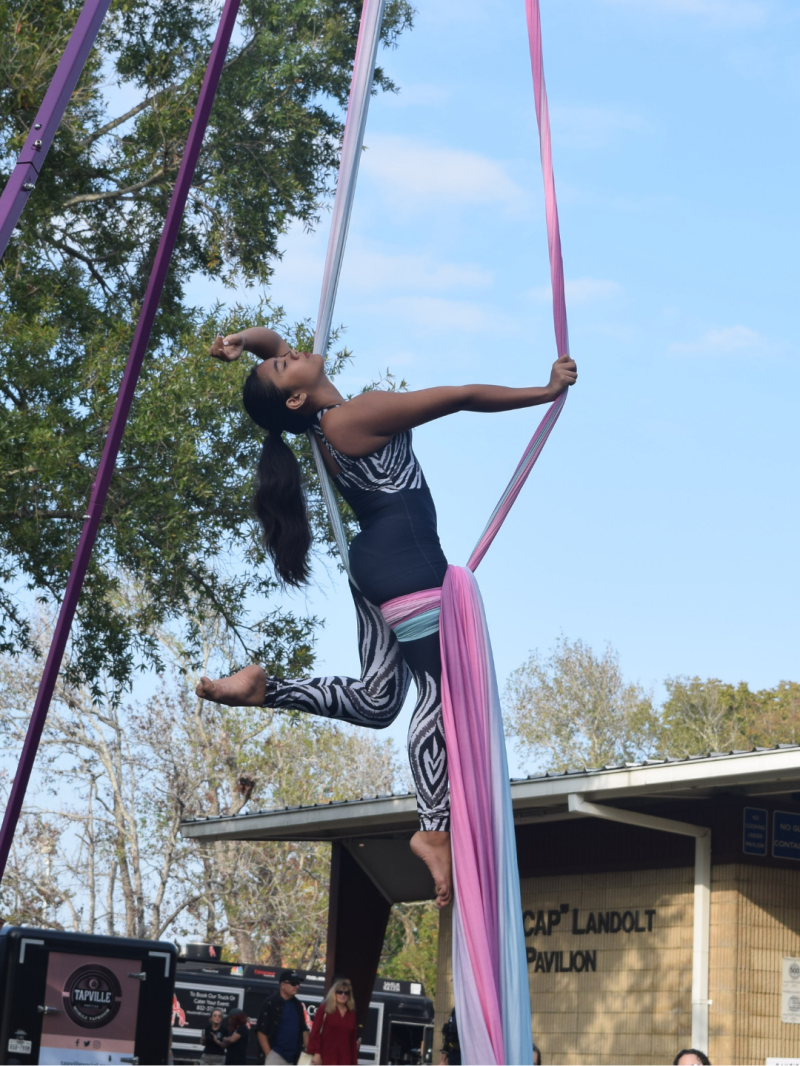
Every week in the studio, I see students of all ages and backgrounds take to the air—each with their own unique strengths, stories, and bodies. As teachers, we want nothing more than for every student to feel good in their own skin, to see themselves as beautiful, strong, and capable. But here's the honest truth: while we can offer encouragement and support, true confidence is something each aerialist must develop from within. Our role is to help you discover it—and to give you the tools to keep growing, both in skill and self-acceptance.
Understanding Body Image in Aerial Arts
Body image challenges affect aerialists at every level. Research shows that approximately 91% of women and 81% of men report dissatisfaction with their bodies at some point in their lives. In physically demanding activities like aerial arts, where our bodies are literally on display as we train, these feelings can intensify.
It's important to understand that struggling with body image doesn't mean you're vain or weak—it means you're human. The pressure comes from multiple sources: social media, comparison with peers, perfectionism, and even well-meaning comments about physical changes or capabilities.
What Body Image Issues Can Look Like
Recognizing the signs early helps us intervene with compassion and support:
In children and teens:
- Avoiding mirrors or constantly checking appearance
- Making frequent negative comments about their body
- Comparing themselves to other students
- Reluctance to participate in videos or photos
- Changes in eating habits or excessive concern with food
- Withdrawal from activities they once enjoyed
- Wearing baggy clothes to hide their body
- Expressing they "can't do" moves because of how they look
In adults:
- Excessive self-criticism during or after class
- Fixating on perceived flaws rather than celebrating progress
- Skipping classes due to appearance concerns
- Over-exercising or restrictive eating patterns
- Difficulty accepting compliments
- Constantly apologizing for their body or abilities
Technique, Strength, and Confidence: The Real Building Blocks
It's easy to focus on what we wish our bodies looked like, especially in a sport as visually stunning as aerial arts. But the secret behind every breathtaking routine isn't a certain body type—it's technique, posture, strength conditioning, and flexibility.
The Four Pillars of Aerial Excellence
1. Technique: Proper body positioning, clean lines, and efficient movement patterns matter far more than body size. A student who understands how to engage their core, point their toes, and execute transitions smoothly will always appear more skilled than someone who simply "looks the part."
2. Strength Conditioning: Aerial arts requires functional strength—the ability to control your body through space. This comes from consistent training, progressive skill building, and patiience. Every body builds strength differently and on its own timeline.
3. Flexibility: Range of motion enhances performance and prevents injury. Flexibility training is personal and varies widely between individuals based on genetics, age, training history, and consistency.
4. Posture and Body Awareness: Understanding where your body is in space and how to present yourself with confidence transforms performances. This is learned through practice and mindful coaching, not through achieving a certain appearance.
These are the foundations that let each student move safely and beautifully in the air. As instructors, we're here to help you hone those skills, not to chase an unrealistic ideal. Our job is to challenge you to improve, to celebrate your progress, and to remind you that aerialists come in every shape and size.
For Students: Finding Your Strengths (And Owning Them!)
Some of the best aerialists I know don't fit the mold you might expect. What sets them apart is their ability to see their own strengths, lean into them, and work steadily on their weaknesses—without letting self-criticism turn into shame.
Practical Strategies for Building Body Confidence
Reframe Your Self-Talk
- Instead of "I can't do this because I'm too heavy/weak/inflexible," try "I'm working on building the strength/flexibility for this skill."
- Replace "I look terrible" with "I'm learning and my body is capable of amazing things."
- When you catch yourself in negative self-talk, pause and ask: "Would I say this to a friend?" If not, don't say it to yourself.
Focus on Function Over Form
- Track your progress by what your body can DO, not how it looks. Keep a journal of skills mastered, holds achieved, or seconds added to your endurance.
- Celebrate non-appearance victories: "I held that pose 5 seconds longer!" or "My transitions felt smoother today!"
- Remember that your body is your partner in this journey, not your enemy.
Curate Your Media Consumption
- Be mindful of who you follow on social media. If an account makes you feel inadequate, unfollow or mute it.
- Seek out diverse aerial artists who represent different body types, ages, and abilities.
- Remember that social media shows highlight reels, not the full reality of anyone's journey or struggles.
Practice Self-Compassion
- Treat yourself with the same kindness you'd offer a struggling friend.
- Acknowledge that difficult days are part of growth, not evidence of failure.
- When you feel frustrated, take a breath and remind yourself: "I'm doing my best, and that's enough."
Set Process Goals, Not Outcome Goals
- Instead of "I want to look like [someone else]," try "I want to train consistently three times per week."
- Focus on controllable actions: attending class, practicing conditioning, working on flexibility.
- Celebrate effort and consistency, not just achievement of specific tricks.
For Parents: How to Support Your Child
As a parent, you play a crucial role in helping your child develop a healthy relationship with their body and with aerial arts. Here's how you can help:
Creating a Supportive Environment
Watch Your Language
- Avoid commenting on your child's body, weight, or appearance—positive or negative. Comments like "you're getting so lean!" can create pressure to maintain that standard.
- Don't comment on other people's bodies, including your own. Children absorb how we talk about bodies in general.
- Focus praise on effort, creativity, and skill development: "I loved how focused you were when you did that skill!" or "Your dedication to practicing is really paying off!"
Recognize Warning Signs Early Research shows that body dissatisfaction can begin as early as age 5, with approximately 40-60% of elementary school girls expressing concerns about their weight or appearance. Stay alert to:
- Changes in eating habits or food-related anxiety
- Excessive exercise or resistance to rest days
- Withdrawal from activities or social situations
- Negative self-talk or appearance-focused comments
- Checking behaviors (frequent weighing, mirror checking)
- Reluctance to wear form-fitting aerial attire
Model Healthy Behaviors
- Demonstrate body acceptance in your own life
- Show that health comes in many forms and sizes
- Engage in joyful movement for pleasure, not punishment
- Talk about food as fuel and enjoyment, not in terms of "good" or "bad"
- Discuss media literacy and how images are often edited or curated
Keep Communication Open
- Create regular opportunities for your child to share their feelings without judgment
- Ask open-ended questions: "How did class make you feel today?" rather than "Did you learn anything new?"
- Listen more than you advise—sometimes children need to be heard, not fixed
- Validate their feelings: "It makes sense that you'd feel frustrated" before offering solutions
Know When to Seek Professional Help If your child shows signs of disordered eating, significant mood changes, social withdrawal, or expresses thoughts of self-harm, consult with a mental health professional who specializes in body image issues or eating disorders. Early intervention is critical.
Helpful Resources for Parents
- National Eating Disorders Association (NEDA): Helpline at 1-800-931-2237 or text "NEDA" to 741741
- The Body Positive: Offers programs and resources for promoting body acceptance
- Common Sense Media: Guidance on media literacy and healthy technology use
- Local therapists specializing in: body image, eating disorders, or adolescent mental health
For Everyone: Supporting Each Other in the Studio
Our studio is built on encouragement, not comparison. We want every student to feel seen and valued for their effort and artistry, not just their appearance.
Building a Culture of Acceptance
What We're Doing as Instructors:
- Using language that focuses on strength and capability
- Demonstrating modifications and progressions that honor different bodies and abilities
- Celebrating diverse body types and what makes each aerialist unique
- Creating a judgment-free zone where all bodies are welcome
- Addressing comparison and competition when we notice it emerging
- Providing constructive feedback focused on technique, not appearance
What Students Can Do:
- Compliment others on their effort, creativity, and improvement—not their bodies
- Share your own struggles when appropriate, helping others feel less alone
- Avoid comparison language like "I wish I had your body/flexibility/strength"
- Celebrate classmates' achievements genuinely
- Speak up if you hear negative body talk becoming normalized
What Parents Can Do:
- Model positive support by celebrating your child's effort and enjoyment
- Avoid comparing your child to other students
- Resist the urge to critique performances based on aesthetics
- Thank instructors for creating accepting and encouraging learning spaces
- Reinforce studio values at home
The Science of Body Image and Self-Perception
Understanding why body image struggles happen can help reduce shame and increase compassion:
Our Brains Are Wired for Comparison: Humans naturally compare themselves to others as a survival mechanism. In modern contexts, this can work against us, especially with constant social media exposure.
The "Spotlight Effect": Research shows we dramatically overestimate how much others notice our appearance. Most people are too focused on themselves to scrutinize you as much as you fear.
Neuroplasticity and Positive Change: The good news? Our brains can be rewired. Consistent practice of positive self-talk and reframing negative thoughts creates new neural pathways. Change is possible with patience and practice.
Movement and Mental Health: Physical activity, including aerial arts, has been shown to improve body image, reduce anxiety and depression, and increase self-esteem—but only when the focus is on enjoyment and capability rather than appearance changes.
Moving Forward Together
Progress in the air is about self-improvement over the long haul, not perfection. When you can recognize what makes you unique, and trust that your contribution matters, you'll find a confidence that radiates both on and off the apparatus.
If you ever find yourself struggling with body image or self-doubt, remember: you're not alone. Talk to your teachers, connect with classmates, and let's support each other as we all grow stronger—physically, mentally, and emotionally.
Your body is not an obstacle to overcome—it's the amazing vehicle that allows you to fly.
Crisis Resources
If you or your child are in crisis:
- National Suicide Prevention Lifeline: 988
- Crisis Text Line: Text HOME to 741741
- NEDA Helpline: 1-800-931-2237
With strength, compassion, and unwavering support,
The Eternal Aerial Arts Team
Remember: Every body is an aerial body. Your presence in our space matters.
Add comment
Comments