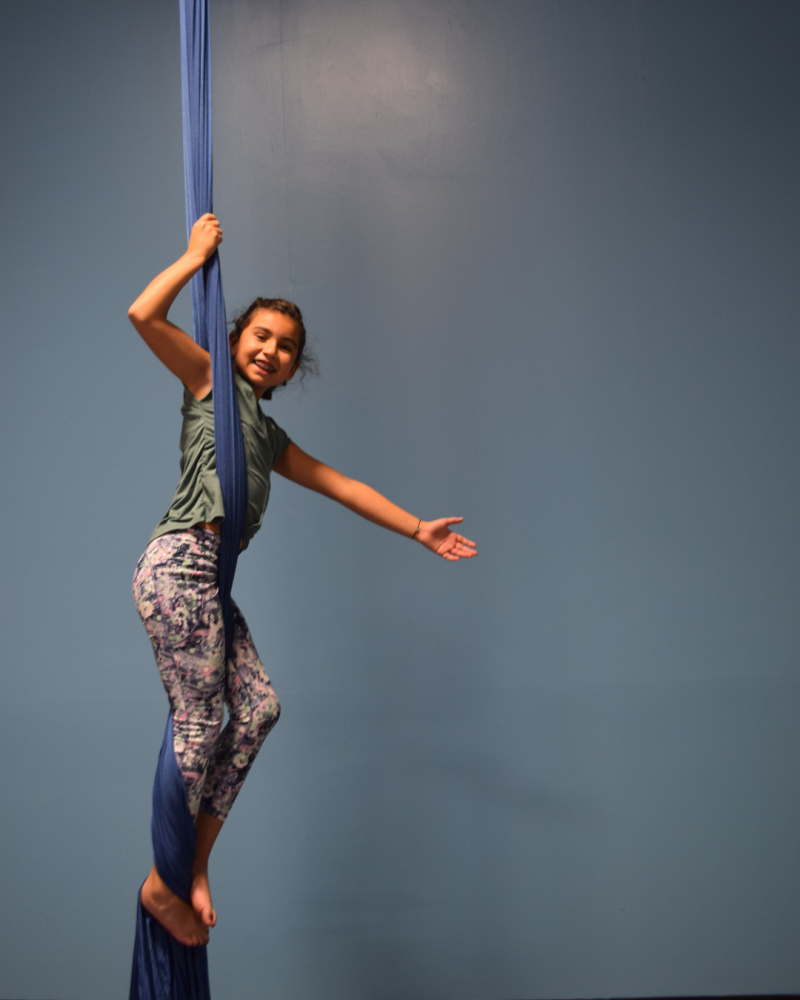
When students walk into an aerial studio for the first time, many arrive with images dancing in their heads—dramatic drops they've seen on Instagram, breathtaking sequences from Cirque performances, moves that look equal parts beautiful and terrifying. As aerial instructors, we understand this excitement. We also understand something else: that the most rewarding aerial journey isn't built on flashy tricks learned before a student is ready, but on a foundation of progressive skill development, community connection, and the deep satisfaction that comes from true mastery.
The challenge we face as teachers is this: how do we keep aerial fun, engaging, and appropriately challenging without increasing injury risk or pushing students beyond their current capabilities? The answer lies in redefining what "challenge" means in our studios.
Rethinking Challenge in Aerial Arts
Challenge doesn't have to mean danger. In fact, the most meaningful challenges in aerial often have nothing to do with height, drops, or impressive tricks. Research in motor learning shows that progressive skill development—where students master foundational movements before advancing—leads to superior long-term performance and retention. Studies on motor skill training demonstrate that individually adjusted progressive difficulty not only enhances learning but also promotes neuroplasticity, the brain's ability to form new neural connections that support skill acquisition.
In our studio, challenge looks like many things. It's a beginner student finally nailing the exit from a sequence wrap after working on it for weeks. It's the satisfaction in their face when they add a controlled spin and followed by a sequence exit without getting tangled. It's an intermediate student executing a beautifully controlled invert with pointed toes and engaged core, rather than jumping into it and then asking to get to "the cool stuff."
These moments might not make for viral social media posts, but they represent genuine achievement. And when students experience this kind of mastery, something shifts. They're no longer chasing external validation through impressive-looking moves; they're developing an internal sense of competence and capability that serves them far better in the long run.
Making Conditioning an Adventure, Not a Chore
One of the biggest complaints we hear from students is that conditioning feels like eating vegetables before dessert—necessary, maybe, but not enjoyable. We've taken a different approach, especially when teaching our younger students. Research on gamification in physical education demonstrates that game-based learning environments significantly enhance student motivation, skill development, and engagement. When physical activities are structured as games or challenges, students show improved coordination, balance, and basic motor skills while also developing collaboration and teamwork abilities.
In many of our classes, we transform conditioning into an obstacle course experience. We set up six stations around the studio, each silk assigned a specific conditioning skill. For our newer students, this might mean swinging over mats at station one, attempting a low front flip at station two, working on inverts at station three, practicing foot locks at station four, reviewing a skill like the Candy Cane Rollup at station five, and trying a hipkey lean from a ground wrap at station six. For more advanced students, the stations become progressively more challenging—doing the Line of Delineation, Dancers Wraps to Footlocks, Crossback Straddle entries, review climbs, splits moves, and other skills that push their current abilities, give them the ability to review past lessons, and get one-on-one help while eveyone in the class is not focused completel on them.
Students move through the circuit one at a time, following each other around the room. For brand-new students, we simplify even further—they swing over mats with carefully spaced start times so they don't collide, learning the joy of movement before we layer on complexity. The atmosphere becomes playful, supportive, and energizing rather than tedious.
What makes this approach work is timing. These circuits happen after our floor conditioning warm-ups, which take the first five to ten minutes of class. During these obstacle course sessions, we focus on movements or skills that should be reviewed before they are built upon in the main lesson, allowing students to activate the right muscle groups and prepare their bodies. As students cycle through the obstacle course, instructors can focus closely on one or two critical stations, assessing how much additional review might be needed before moving to the new material in the main lesson.
The result? Students look forward to conditioning. They celebrate each other's successes as they progress through the stations. And they're building the strength, body awareness, and muscle memory they need to safely execute more advanced skills.
The Power of Progressive Assessment
When we say we follow a curriculum-based approach, we mean it. Every student in our program knows exactly what skills they need to master before progressing to the next level. We use colored levels for kids and beginner, intermediate, and advanced designations for adults. Anyone coming from another studio must take a level assessment before joining a class—not because we don't trust their previous training, but because we need to ensure they have the foundational skills our curriculum builds upon.
Our first time assessments are by appointment, but for current students, our ongoing assessments happen organically throughout class, often in ways students don't even realize they're being tested. We watch as they attempt skills from a standing position on the mat—can they lift themselves off the ground? Can they secure a wrap while standing? Can they hold a foot lock when they're only a few inches above the mat? Mastery learning research confirms that this approach—where students must demonstrate competency at each level before advancing—leads to better long-term retention and performance.
For insteance, when teaching climbing, we build in what we call "descent tests" before we even mention teaching students how to climb. Students learn how to safely come down before they learn how to go up, ensuring they always have a safe exit strategy. This isn't just about physical safety; it's about building confidence. Students who know they can safely descend from any height are more willing to challenge themselves appropriately.
One of the most rewarding moments in teaching happens when a student comes to us unable to invert finally achieves it. We see this often—students arrive low upper body strength and core engagement, fear of being upside down or no previous experience with this movement pattern. We work those muscles through floor exercises, rolling back, engaging the core, building the neural pathways. Then one day during class, when everyone goes up to attempt an invert while standing on the mat, it happens. The breakthrough. The surprise and joy on their face is worth more than any flashy drop we could have rushed them into.
Building Community Through Shared Experience
Aerial can be isolating if we're not intentional about creating connection. When the focus becomes solely individual achievement—who can do the hardest drop, who can climb highest—we lose something essential. Research confirms that social-emotional learning integrated into physical education fosters both skill development and overall wellbeing, with game-based activities creating opportunities for new friendships and deeper connection.
The last five minutes of every class is dedicated to cool-down, but it's so much more than stretching. We start with our hands and systematically stretch every major muscle group, ensuring bilateral symmetry. But during this time, we also talk. We discuss what went well that day, what was each person's favorite part of class, what they did particularly well, and what they'd like to review next week. We complement students on their perseverance and remind them how far they've come in their aerial journey. We check in on how they're doing, period—not just in aerial, but in life.
This ritual serves multiple purposes. Physically, it helps prevent injury and promotes recovery. Emotionally, it creates space for recognition and reflection. Socially, it builds community and mutual support. Students leave class not just having worked their bodies, but having connected with others who share their passion.
Responding When Students Want More
Inevitably, students will ask for moves they're not ready for. Someone sees a beautiful drop on social media and wants to try it immediately. These are crucial teaching moments.
Our response is always the same: we have a specific curriculum designed to build body control and apparatus control progressively. When students demonstrate sufficient mastery of both, we begin introducing drops—starting with very safe wraps that train their bodies how to drop with gradually decreasing support. It's not about denying them exciting moves; it's about ensuring they have the foundation to execute those moves safely and beautifully when the time comes.
Most students, once they see how much skill they're developing through our approach, stay with us. They appreciate understanding the "why" and "how" behind each movement. They feel more confident knowing their progress is built on solid fundamentals. Those who don't stay, who seek studios that will give them flashy moves immediately, ultimately find their own path. And while it's difficult to see students leave, we've learned not to compromise safety for retention. Our commitment is to the long-term wellbeing of every student who trusts us with their aerial education.
Making Aerial Accessible to Everyone
Every year, our studio hosts a group of young adults with physical and cognitive disabilities. They arrive with aides who know them well, and together we create aerial experiences adapted to each person's needs and abilities. Students in wheelchairs—who often have incredibly strong upper bodies—work from seated positions on the floor. Students with weak grip strength learn wraps that incorporate wrist locks for added security. Students with cognitive delays simply take things slower, often focusing primarily on conditioning exercises that are still engaging and fun.
One of our most popular adapted moves is a wrap that can be done from the floor, getting students into a seated position where they can swing just inches off the ground. It takes a few tries to master, and when everyone gets it, the celebration is collective and genuine.
The point isn't to make aerial "easier" for these students—it's to make it accessible. We lower the apparatus, work from standing or sitting positions on the mat, and focus on what each person can do rather than what they can't. No special equipment needed, just creative problem-solving and a genuine commitment to inclusion.
Aerial isn't "for" some people and "not for" others. It's about how we as instructors make the art form accessible, how we gear our teaching to make it fun, safe, and empowering for every body that walks through our doors. When we do this well, students keep coming back—not because we're giving them the hardest, most dangerous moves, but because they feel seen, capable, and genuinely challenged in ways that honor their current abilities while pointing toward future growth.
The Long Game
The Instagram-driven culture of aerial arts can make it tempting to prioritize aesthetic over foundation, flash over substance. But those of us who have been teaching long enough know the truth: students who build slowly, master thoroughly, and progress thoughtfully develop not just better technique but deeper love for the art form. They stay with aerial longer. They experience fewer injuries. They become the kind of students who can eventually execute those beautiful, challenging moves with the control and confidence they deserve.
Challenge doesn't require danger. Fun doesn't mean reckless. The most rewarding aerial experiences come from progressive mastery, supportive community, and the deep satisfaction of knowing you've truly earned each new skill. When we keep this at the center of our teaching, we create not just skilled aerialists, but empowered, confident individuals who understand that the journey matters just as much as the destination.
Add comment
Comments